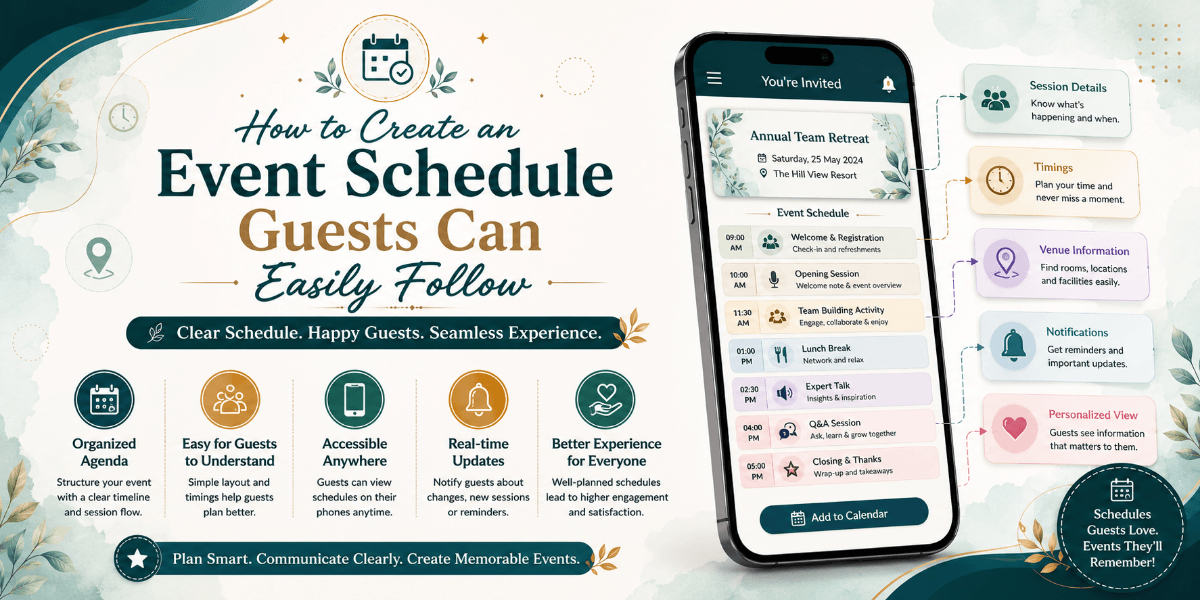
How to Create an Event Schedule Guests Can Easily Follow
A well-planned event schedule helps guests understand what will happen, when it will happen, and where they need to be. Whether the event is a corporate gathering, celebration, festival, workshop, or private occasion, a clear timeline can make the experience more comfortable and organized.
Start With the Most Important Moments
Begin by listing the activities that define the event. These may include guest arrival, registration, opening sessions, meals, performances, presentations, activities, or the closing segment.
Use Realistic Time Blocks
A schedule should reflect how long activities actually take. Allow enough time for guests to arrive, move between areas, take breaks, and settle before the next activity begins.
Separate Guest Activities From Organizer Tasks
Not every task performed by the organizing team needs to appear on the guest schedule. Focus on information that helps attendees understand what they can attend, when they should arrive, and what they should expect.
Make Transitions Clear
Large events often involve movement between rooms, stages, activity areas, or dining spaces. Include useful transition information when guests need to move from one part of the event to another.
Highlight Important Times
Some moments deserve more attention than others. Use clear headings or visual hierarchy to make keynote sessions, main performances, meals, ceremonies, registration deadlines, or other important activities easy to identify.
Keep the Schedule Mobile-Friendly
Guests may check the schedule while travelling or while already at the venue. A simple vertical structure with readable text can make an event timeline easier to use on smartphones.
Update the Schedule When Plans Change
Events can run early, late, or change unexpectedly. If important timings change before the event, make sure guests receive the latest version rather than relying on an outdated schedule.
Include the Schedule in a Digital Event Experience
A digital invitation or event page can keep the schedule together with other important information such as the venue, RSVP details, directions, and guest instructions.
Final Thoughts
A useful event schedule is not simply a list of times. It is a communication tool that helps guests understand the flow of the event and plan their participation with confidence.
FAQ
What should an event schedule include?
Include important activities, timings, guest arrival information, breaks, transitions, and any sessions or moments guests are expected to attend.
Should every event have a detailed schedule?
Not necessarily. Simple events may only need a few important timings, while larger events with multiple activities can benefit from a detailed itinerary.