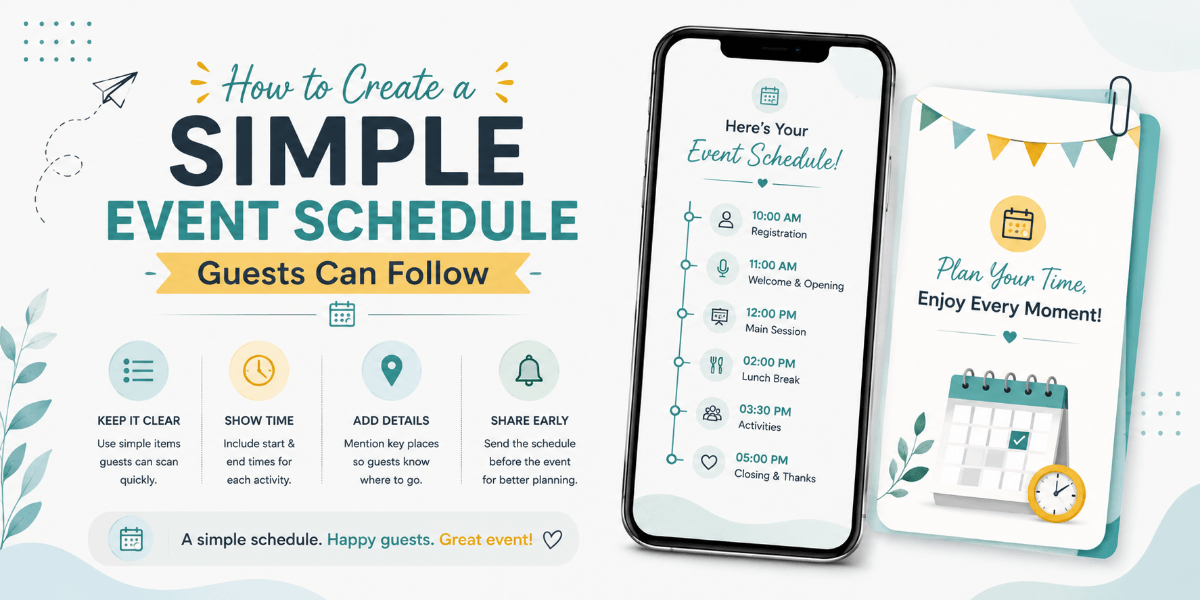
How to Create a Simple Event Schedule Guests Can Follow
A well-planned event schedule helps guests understand what is happening and when. It also helps organizers coordinate different activities, speakers, vendors, and staff throughout the event.
Start With the Main Purpose of the Event
Before creating the schedule, identify the most important activities. A conference may prioritize sessions, while a family celebration may focus more on food, ceremonies, and social time.
Set Realistic Time Slots
Avoid creating a schedule that leaves no room for delays. Give important activities enough time and include reasonable gaps between major parts of the event.
Put the Most Important Information First
Guests should quickly understand the arrival time, opening activity, major highlights, and expected ending time. These details help them plan their participation.
Include Breaks
Long events need breaks for food, refreshments, rest, networking, and movement between locations. Breaks can also help organizers recover from small delays.
Keep the Guest Version Simple
Organizers may need a detailed internal timeline, but guests usually need a simpler version. Share information that helps them understand their experience rather than every behind-the-scenes task.
Highlight Important Activities
If there is a keynote, ceremony, performance, meal, special announcement, or other major moment, make it easy for guests to identify it within the schedule.
Share the Schedule Digitally
A digital event page or invitation can make the schedule accessible from a phone. This is particularly useful when timings may change closer to the event.
Update Guests When Plans Change
Schedules can change because of speakers, weather, technical issues, or other circumstances. Make sure guests have access to the latest version rather than relying on an outdated schedule.
Final Thoughts
A good event schedule gives guests structure without making the event feel rigid. Keep it realistic, easy to read, and focused on the information attendees actually need.
FAQ
What should an event schedule include?
Include arrival time, major activities, sessions, breaks, important highlights, and the expected ending time.
Should guests receive the complete event timeline?
Not always. Guests generally need a simplified schedule focused on the activities and information relevant to their experience.