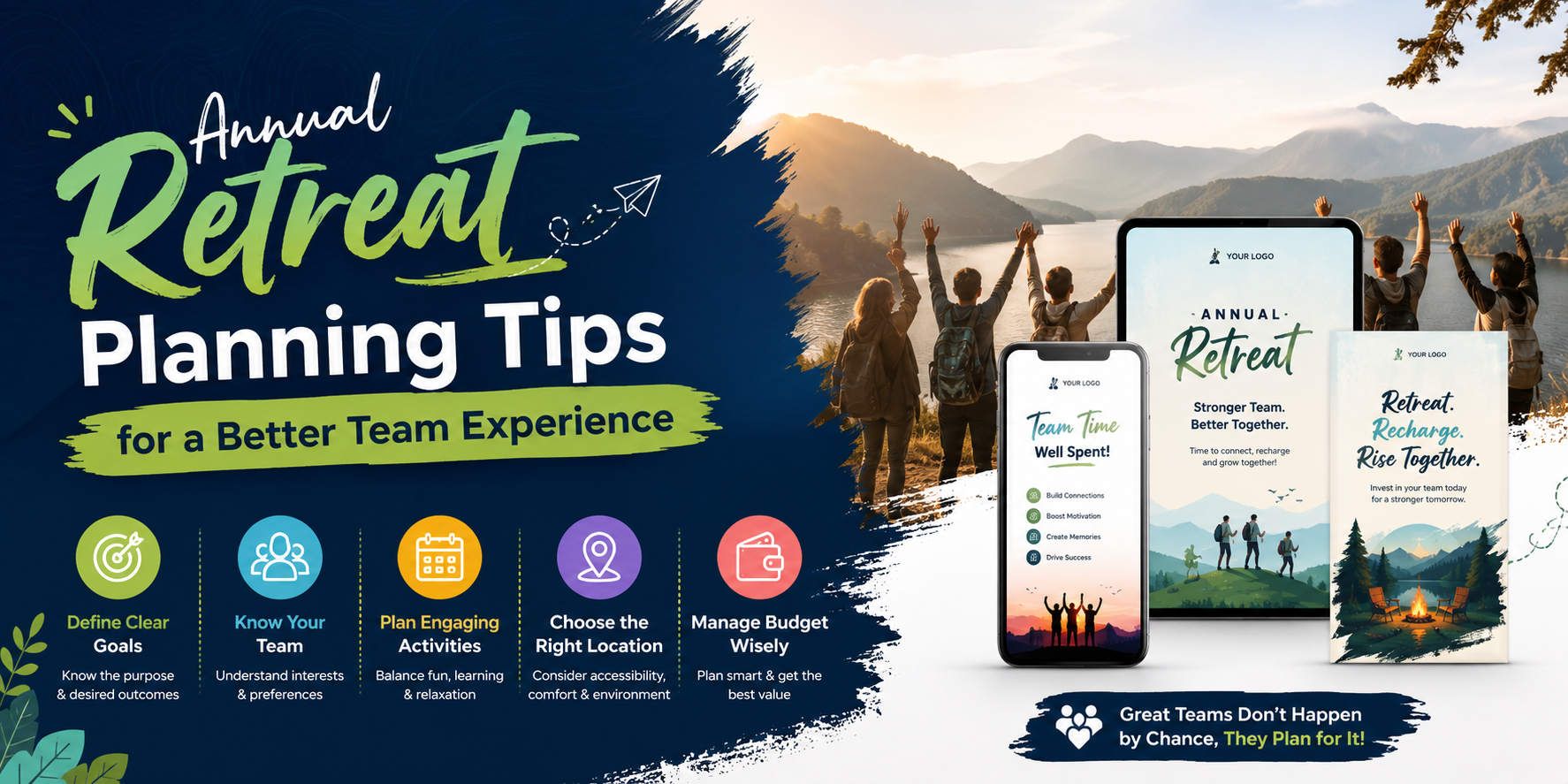
Annual Retreat Planning Tips for a Better Team Experience
An annual retreat gives teams a chance to step away from their normal routine, reflect on goals, build relationships, and spend focused time together. Good planning can make the experience useful as well as enjoyable.
Define the Main Purpose
Before choosing activities or a venue, decide what the retreat should achieve. The focus might be strategic planning, team connection, learning, recognition, or a combination of goals.
Choose a Suitable Location
Consider travel time, available space, accommodation needs, meeting areas, and activities when selecting the retreat location.
Create a Balanced Schedule
Mix structured sessions with breaks and informal time. An overloaded schedule can make participants tired, while a balanced plan gives employees enough time to interact and recharge.
Plan Useful Team Sessions
Workshops, group discussions, brainstorming sessions, goal-setting activities, and team exercises can help employees make better use of the retreat.
Communicate Details Early
Share the retreat dates, location, schedule, travel information, accommodation details, and anything participants should bring before the event.
Include Time for Recognition
An annual retreat can also be a good opportunity to recognize achievements, appreciate contributions, and celebrate important team milestones.
Final Thoughts
A successful annual retreat should balance business objectives with meaningful team experiences. Clear goals, thoughtful scheduling, and early communication can make the retreat more productive and enjoyable.
FAQ
What should an annual retreat include?
An annual retreat can include planning sessions, workshops, team activities, recognition moments, networking, meals, and time for relaxation.
How early should a company plan an annual retreat?
Planning early gives organizers more time to choose a suitable location, coordinate schedules, arrange travel, and communicate details to employees.