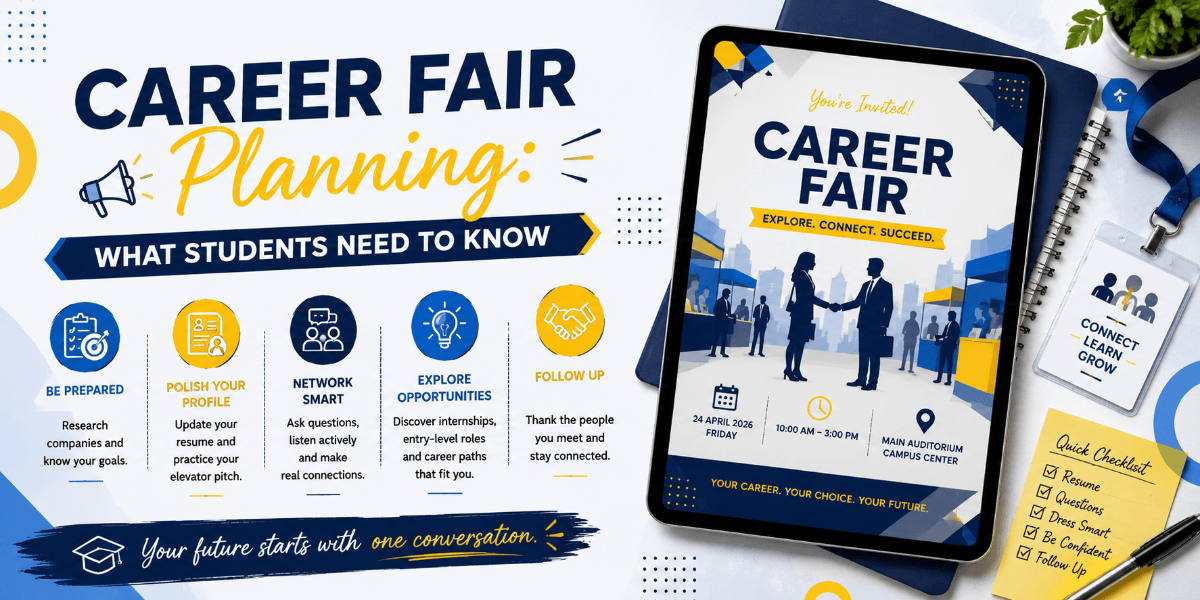
Career Fair Planning: What Students Need to Know
A career fair can give students an opportunity to meet employers, learn about different career paths, and understand what companies look for in potential candidates.
Students can get more value from the event when they prepare before arriving rather than simply walking from one employer booth to another.
Research Participating Employers
Find out which companies or organizations are attending and identify the ones that match your interests, skills, education, or career goals.
Prepare a Short Introduction
Be ready to introduce yourself clearly. A short introduction can include your area of study, interests, relevant skills, and the type of opportunity you are looking for.
Prepare Useful Questions
Thoughtful questions can help students learn more about a company and show that they have prepared for the conversation.
Organize Your Resume and Details
Keep your resume and relevant information ready if employers request it. Make sure your contact information is accurate and easy to find.
Dress Appropriately
The appropriate clothing depends on the career fair and participating organizations. When in doubt, choose a neat and professional appearance.
Plan Your Time
Large career fairs can have many employers. Identify priority booths beforehand so you have enough time for the conversations that matter most to you.
Follow Up After the Fair
If an employer provides contact information or asks you to follow up, do so professionally. A timely follow-up can help continue the conversation after the event.
Final Thoughts
A career fair is more useful when students approach it as an opportunity to learn and build professional connections. Preparation, clear communication, and thoughtful questions can make the experience more valuable.
FAQ
What should students take to a career fair?
Students should prepare their resume, basic career information, questions for employers, and any documents specifically requested by the event organizers.
How should students prepare for a career fair?
Research participating employers, prepare a short introduction, identify priority organizations, and think about questions before attending.