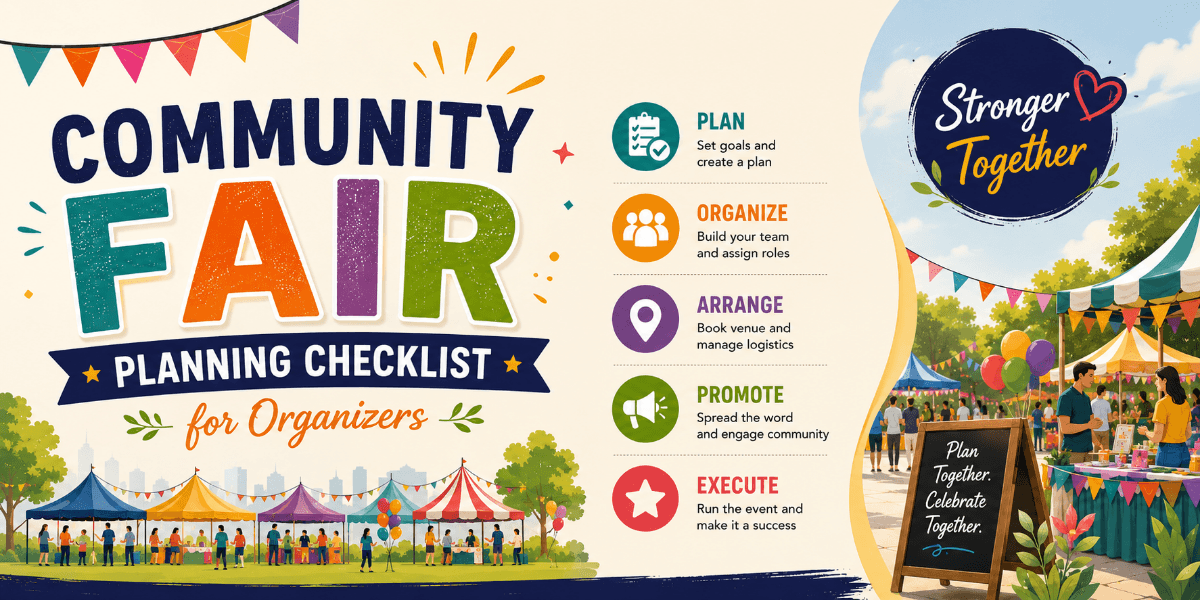
Community Fair Planning Checklist for Organizers
A community fair brings residents, local organizations, businesses, families, and visitors together around shared activities and experiences. Because these events often involve multiple participants and moving parts, thoughtful planning can make the day easier for both organizers and visitors.
Define the Purpose of the Fair
Start by deciding what the fair is meant to achieve. It may focus on community connection, local businesses, fundraising, cultural activities, food, entertainment, education, or a combination of goals.
Choose a Suitable Venue
Consider the expected number of visitors, available space, parking, accessibility, restrooms, power requirements, weather conditions, and areas needed for vendors and activities.
Plan Vendor and Activity Areas
Create a clear layout for stalls, food areas, performances, workshops, children's activities when applicable, registration points, seating, and other attractions. Good organization can improve visitor movement around the venue.
Create a Visitor-Friendly Schedule
List performances, workshops, demonstrations, competitions, talks, or other planned activities with clear timings. Visitors should be able to understand what is happening throughout the day.
Manage Participant Registration
If vendors, performers, volunteers, exhibitors, or activity leaders need to register, collect their information early enough to organize the event properly.
Communicate Practical Visitor Information
Visitors may need information about parking, entry, timings, venue access, public transportation, registration requirements, prohibited items, or what they should bring. Share useful instructions before the event.
Promote the Event Clearly
Public events need enough information for people to decide whether they want to attend. The event name, date, location, main attractions, timings, and entry information should be easy to understand.
Prepare for Changes
Outdoor community fairs can be affected by weather, vendor changes, performance cancellations, or timing adjustments. Have a communication plan ready so visitors can receive important updates quickly.
Use a Digital Event Page or Invitation
A digital event experience can bring the schedule, venue information, registration details, attractions, announcements, and other visitor information together in one place.
Final Thoughts
A successful community fair depends on more than attractions. Clear planning, organized participation, practical visitor information, and timely communication can help create a better experience for everyone involved.
FAQ
What should be included in a community fair plan?
Consider the purpose, venue, layout, vendors, activities, schedule, registrations, visitor information, promotion, safety requirements, and communication plan.
How can organizers make a community fair easier for visitors?
Provide clear timings, venue information, activity details, entry instructions, parking guidance, and timely updates when plans change.