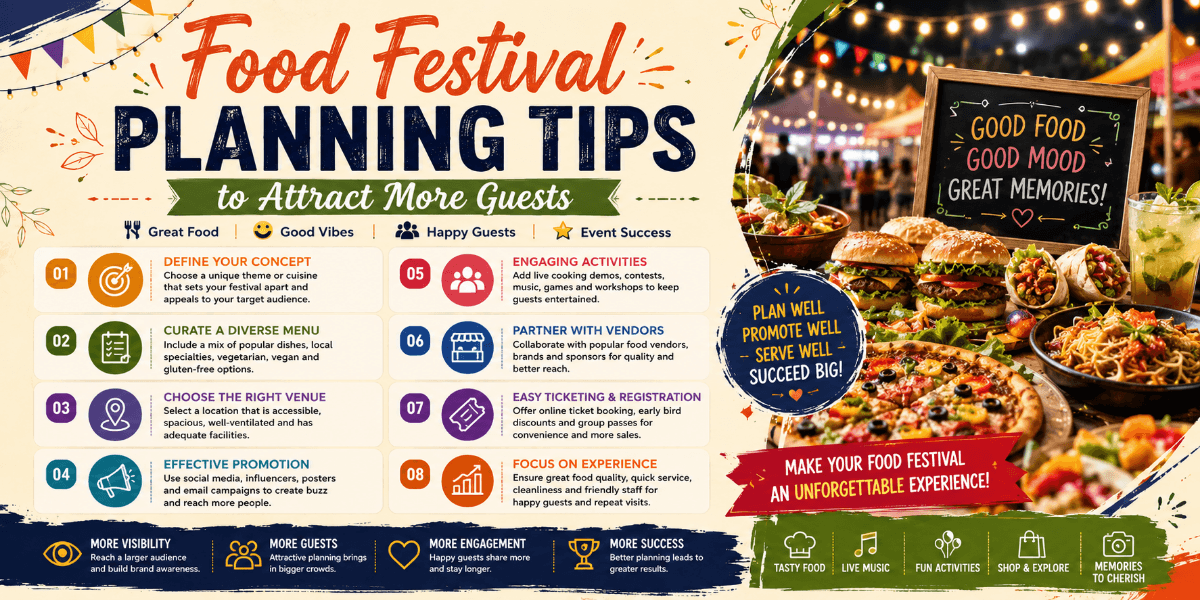
Food Festival Planning Tips to Attract More Guests
A food festival can bring together local vendors, restaurants, food creators, families, and curious guests. A strong event plan can help create an enjoyable experience while keeping vendors and visitors organized.
Choose a Clear Food Festival Concept
Decide whether the event will focus on local cuisine, street food, regional specialties, desserts, international dishes, or a combination of food experiences.
Select and Organize Vendors
Choose vendors that fit the event concept and provide enough variety for guests. Organize stall locations so visitors can move comfortably through the venue.
Plan Guest-Friendly Areas
Include suitable areas for seating, eating, entertainment, photographs, and movement between food stalls. Clear signs can help guests find different sections quickly.
Add Interactive Activities
Cooking demonstrations, tasting sessions, food competitions, live music, workshops, and family activities can make the festival more engaging.
Promote the Event With Useful Details
Promotion should clearly communicate the date, venue, food highlights, activities, timings, and other information guests need before deciding to attend.
Prepare for Crowd Management
Estimate attendance and plan entrances, exits, seating, vendor areas, waste collection, and guest movement in advance.
Final Thoughts
A successful food festival combines great food with a comfortable guest experience. Good vendor coordination, clear communication, and thoughtful venue planning can make the event more enjoyable.
FAQ
What makes a food festival successful?
A strong variety of food, organized vendors, comfortable guest areas, engaging activities, clear communication, and good crowd planning can contribute to a successful food festival.
What information should a food festival invitation include?
Include the event date, time, venue, food highlights, activities, and any important information guests should know.