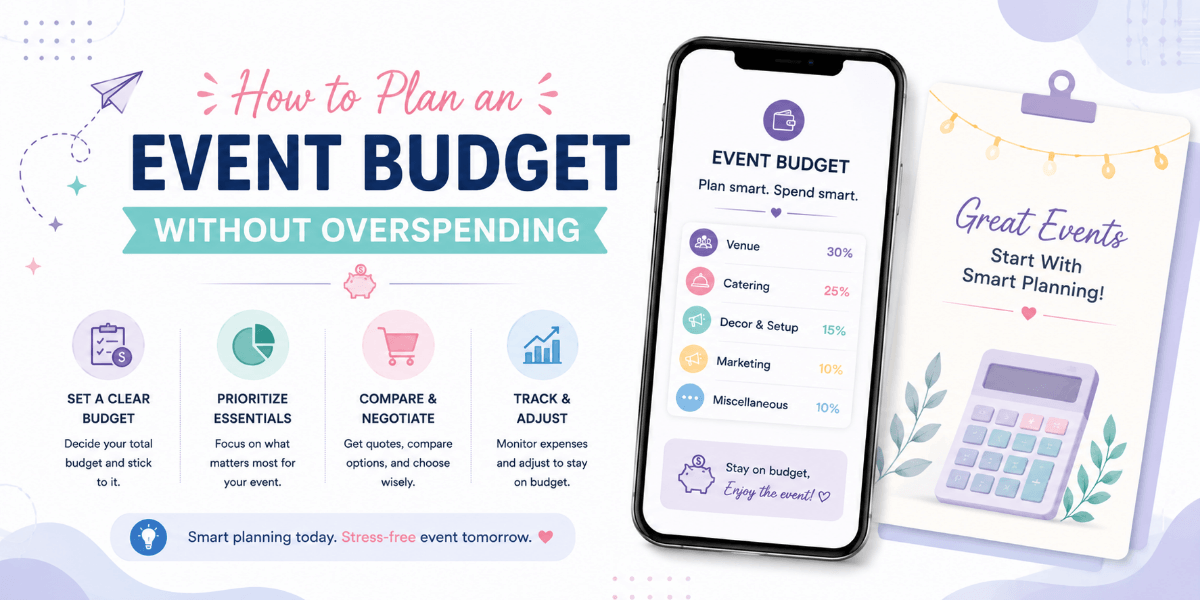
How to Plan an Event Budget Without Overspending
Planning an event can become expensive when small costs start adding up. A clear budget helps organizers understand where their money is going and make better decisions before committing to unnecessary expenses.
Start With the Total Amount You Can Spend
Before choosing vendors or making bookings, decide how much you are comfortable spending. Having a clear upper limit can help guide every decision that follows.
List the Major Event Expenses
Common expenses can include the venue, food, decorations, entertainment, invitations, photography, transportation, staffing, and other services. The exact categories will depend on the type of event.
Separate Essential and Optional Costs
Not every expense has the same importance. Identify what the event genuinely needs and what is simply an enhancement. This makes it easier to reduce spending if the budget becomes tight.
Keep Some Money for Unexpected Expenses
Last-minute requirements can appear during event planning. Keeping a small portion of the budget aside can help cover unexpected costs without disrupting the rest of the plan.
Compare Vendors Before Booking
Do not select a vendor based only on the first quote you receive. Compare services, inclusions, timing, and pricing so you understand what you are actually paying for.
Track Payments and Pending Costs
Keep a simple record of deposits, completed payments, and upcoming expenses. This gives you a clearer picture of how much of the budget has already been committed.
Do Not Cut the Guest Experience First
When reducing costs, consider removing unnecessary extras before compromising important parts of the guest experience such as food quality, accessibility, seating, or clear event communication.
Review the Budget Before the Event
A final budget review can help identify unpaid bills, last-minute requirements, or expenses that were forgotten during the initial planning stage.
Final Thoughts
A good event budget is not about spending as little as possible. It is about spending intentionally and making sure the most important parts of the event receive the right attention.
FAQ
What should an event budget include?
Consider venue, food, decorations, entertainment, invitations, photography, transportation, staffing, and other event-specific expenses.
How can I avoid overspending on an event?
Set a maximum budget, separate essential and optional costs, compare vendors, track payments, and keep money aside for unexpected expenses.