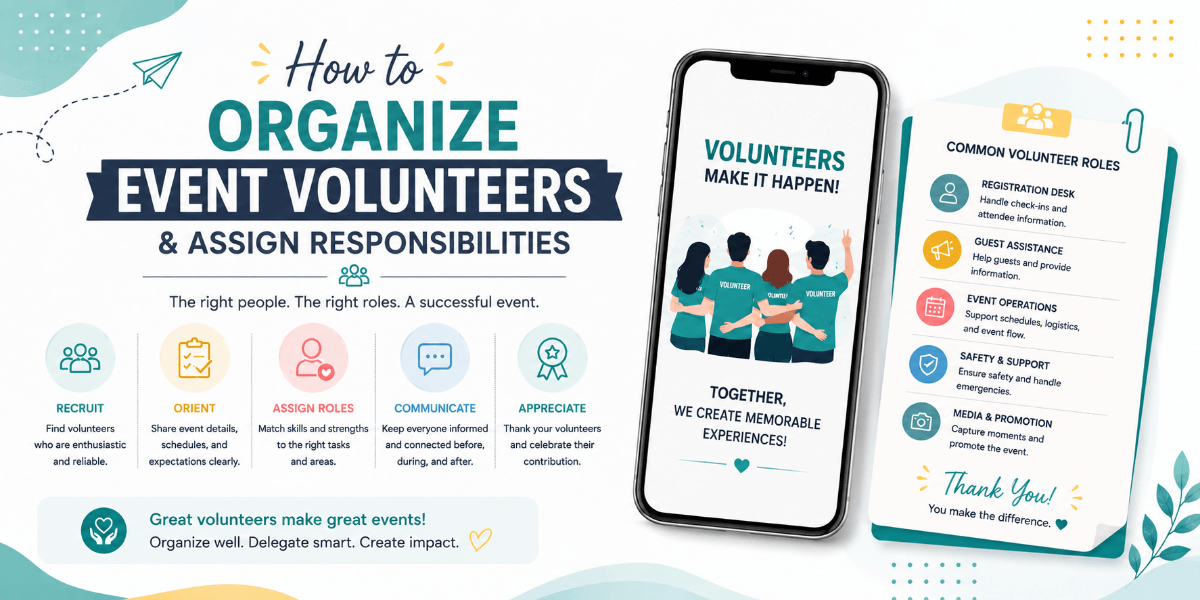
How to Organize Event Volunteers and Assign Responsibilities
Volunteers can play an important role in community events, festivals, college events, charity programs, and other gatherings. However, simply having volunteers is not enough. Clear responsibilities and communication are needed to make the team effective.
Identify the Areas That Need Support
Start by listing the parts of the event where additional people are needed. This may include registration, guest assistance, directions, stage coordination, seating, activity management, or information desks.
Assign One Clear Responsibility
Each volunteer should understand what they are responsible for. Avoid giving everyone vague instructions such as helping wherever needed.
Create Small Teams
For larger events, group volunteers by function. A registration team, guest-support team, stage team, and venue-support team can make communication easier.
Choose Team Leaders
Each group can have a person responsible for coordinating the team and communicating with the main event organizer. This reduces the number of people who need to contact the organizer directly.
Share the Event Schedule
Volunteers should know the important timings of the event so they understand when they need to be ready and when their responsibilities change.
Provide Basic Guest Information
Volunteers who interact with guests should know essential information such as venue areas, registration procedures, restrooms, parking, schedules, and whom to contact when they cannot answer a question.
Give Instructions Before Event Day
A short briefing before the event can help volunteers understand their roles. This is particularly important when the event involves multiple teams or a large number of attendees.
Keep Communication Simple During the Event
Use a clear communication method so volunteers can quickly report problems or request assistance. Everyone should know who to contact for different types of issues.
Thank Your Volunteers
Volunteers give their time and energy to help make an event successful. A simple thank-you after the event can go a long way toward making them feel appreciated.
Final Thoughts
Good volunteer management is about clarity. When people know their responsibilities, schedule, team structure, and communication process, they can contribute more confidently to the event.
FAQ
What responsibilities can event volunteers handle?
Volunteers can support registration, guest assistance, directions, seating, activities, stage coordination, information desks, and other event operations.
How do I manage volunteers during an event?
Assign clear roles, create teams, appoint team leaders, share the schedule, provide a communication method, and brief everyone before the event.