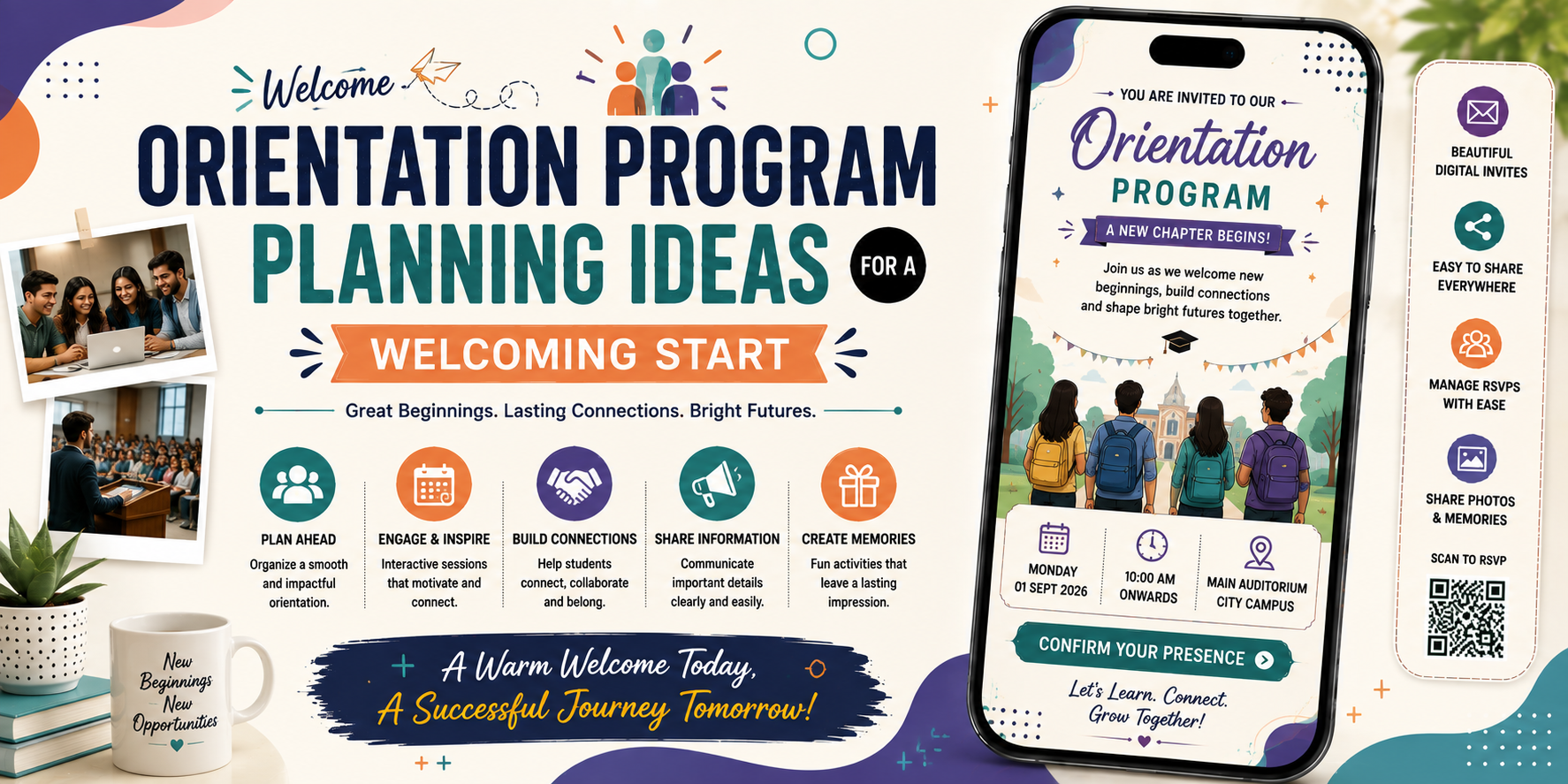
Orientation Program Planning Ideas for a Welcoming Start
An orientation program helps new students, employees, or members become familiar with an institution, organization, or community. A clear and welcoming event can make the transition easier from the beginning.
Define the Orientation Goals
Decide what participants should learn or experience during the program. This may include introductions, rules, facilities, schedules, support services, or opportunities to meet other participants.
Create a Simple Program Schedule
Plan welcome remarks, introductions, presentations, tours, activities, breaks, and question-and-answer sessions in a logical sequence.
Include Interactive Activities
Icebreakers, small group discussions, campus or facility tours, quizzes, and introduction activities can help participants feel more comfortable.
Introduce Key People
Give participants an opportunity to meet teachers, coordinators, team leaders, staff members, or other people they may interact with regularly.
Share Important Information
Provide participants with useful details about schedules, locations, facilities, rules, contacts, and next steps. Keeping information organized can make the first experience less overwhelming.
Send Details Before the Event
A digital invitation or event page can help participants access the date, time, location, schedule, and arrival instructions before attending.
Final Thoughts
A successful orientation program should be informative without feeling overwhelming. A welcoming atmosphere, useful information, interactive activities, and clear communication can help participants start confidently.
FAQ
What should an orientation program include?
It can include introductions, presentations, tours, activities, important information, question sessions, and opportunities for participants to connect.
Why are interactive activities useful during orientation?
Interactive activities can help participants meet others, become comfortable with the environment, and engage with the information being presented.