How to Share Different Event Information With Different Guests
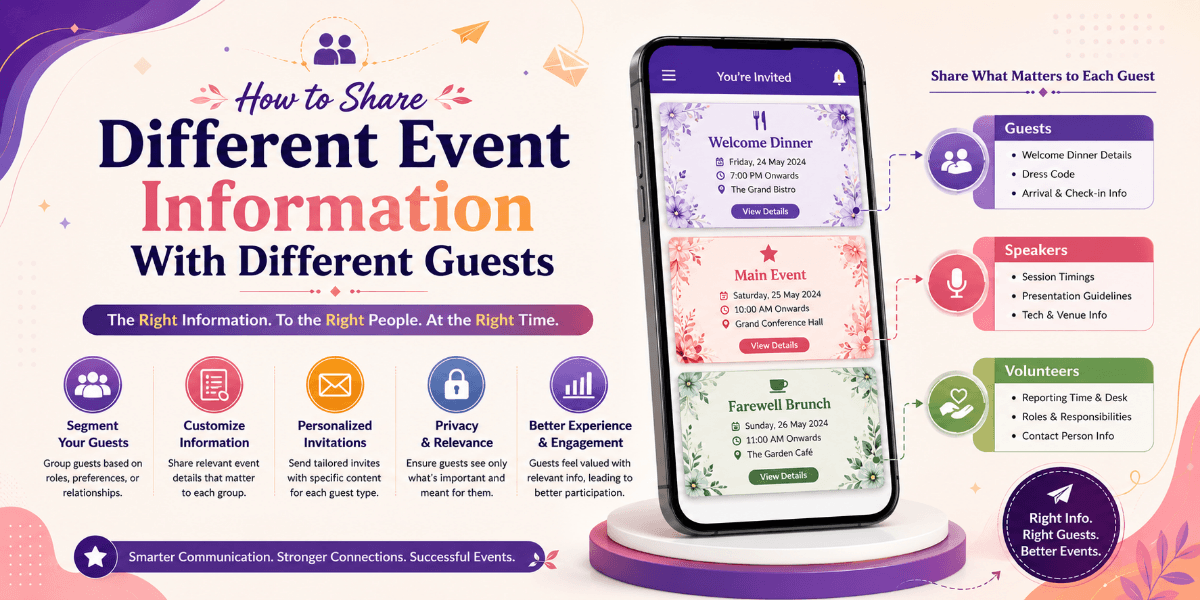
Not every guest at an event needs the same information. Speakers may need arrival instructions, VIP guests may have different access arrangements, employees may receive a schedule, and general attendees may only need the main event details. Organizing information around guest needs can make communication more effective.
Identify Guest Groups
Start by understanding who will attend the event. Depending on the event, groups may include general guests, speakers, performers, organizers, VIP attendees, employees, partners, or registered participants.
Separate Essential Information From Special Instructions
Everyone may need the event date, time, and venue, while only certain groups need additional instructions. Separating common information from group-specific details keeps communication relevant.
Give Speakers Their Own Practical Information
Speakers may need information about reporting time, presentation requirements, session timings, technical arrangements, or designated areas. These details may not be useful to general attendees.
Consider Different Access Requirements
Some guests may have special entry arrangements, reserved seating, backstage access, registration requirements, or other event-specific permissions. Communicate these instructions clearly to the people who need them.
Avoid Sending Unnecessary Information
Too much information can make important instructions harder to notice. Guests are more likely to understand a message when it focuses on what is relevant to their role at the event.
Keep Common Information Consistent
Even when messages are personalized, shared details such as the main date, venue, and event timing should remain consistent. This prevents different guest groups from receiving conflicting information.
Use Structured Digital Communication
A digital event experience can organize general event details while allowing relevant instructions or sections to be communicated according to guest needs. This can be especially useful for larger or more complex events.
Review Information Before Sending
Check that each guest group receives the correct instructions. A simple review can prevent issues such as sending private information to the wrong audience or leaving an important group without necessary details.
Final Thoughts
Effective guest communication is not always about sending more information. It is about sending the right information to the right people at the right time.
FAQ
Why would different guests need different event information?
Guests can have different roles, access requirements, schedules, responsibilities, or participation requirements.
How can organizers avoid overwhelming guests?
Separate common event information from group-specific instructions and communicate only the details relevant to each audience.